





















































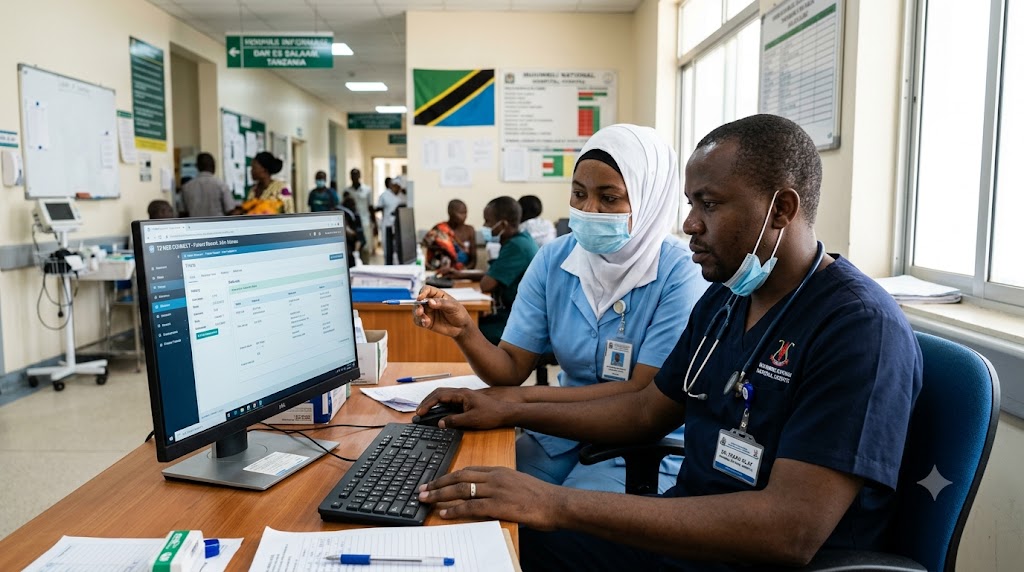
Tanzania is expanding digital healthcare services, with 222 public health facilities now connected to an integrated electronic medical records system designed to improve patient care and hospital coordination.
The development, reported on October 13, 2026, marks progress in the government’s efforts to modernise healthcare administration and improve the exchange of medical information across the country.
According to the Ministry of Health, the system was introduced in October 2025. It allows authorised healthcare workers to access relevant patient histories, including previous diagnoses, treatments, laboratory results and follow-up plans, even when patients receive care at different facilities.
The connected institutions include district hospitals, regional referral hospitals, zonal hospitals, specialised hospitals and national hospitals. The platform uses the Health Data Universal Application Programming Interface (HDU API) to support secure information exchange.
The ministry says digital records can improve referrals, reduce duplicate documentation and help clinicians make better-informed treatment decisions. The system also aims to reduce the risk of repeated tests and medication errors caused by incomplete medical histories.
The expansion could make hospital visits more coordinated for patients who need treatment at multiple facilities. However, the benefits will depend on reliable implementation, secure handling of medical information, staff training and continued system maintenance.
As Tanzania continues investing in digital health infrastructure, the next challenge will be ensuring that connected facilities use the system effectively while protecting patient confidentiality.



Comments (0)
Sign in to join the conversation.