



















































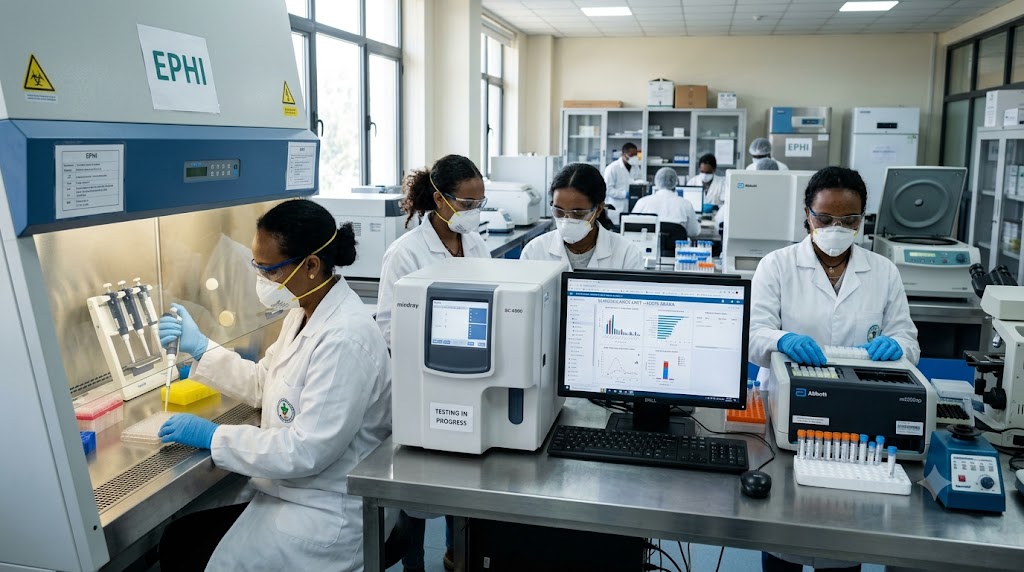
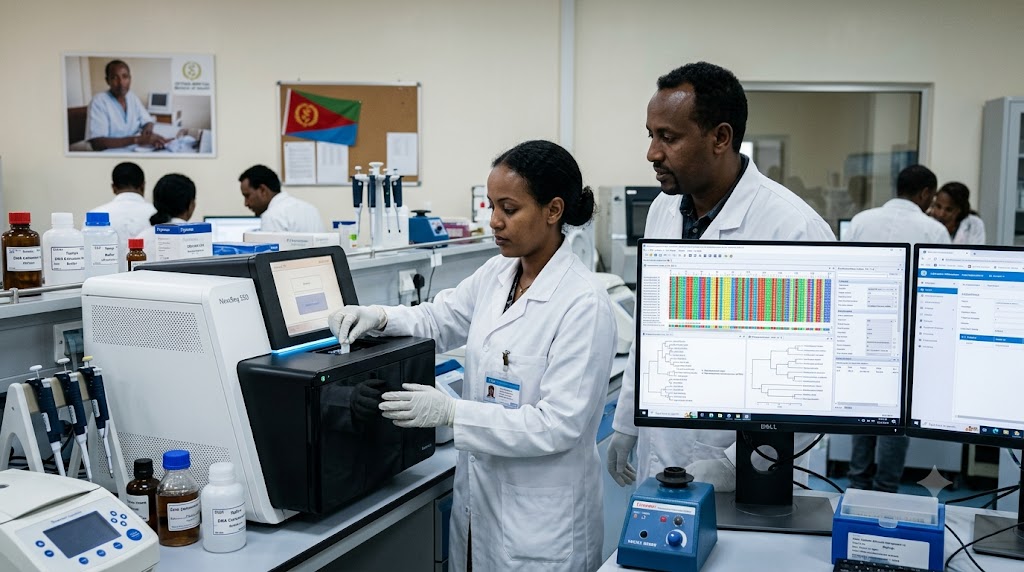
Ethiopia is strengthening its public-health response by improving medical laboratory systems designed to detect infectious diseases earlier and support faster outbreak investigations.
The World Health Organization reported on September 30 that Ethiopia is working to improve laboratory preparedness and response capabilities amid growing health challenges linked to humanitarian emergencies, climate pressures and diseases that can spread between animals and humans.
Reliable laboratory services are essential for identifying pathogens, confirming suspected infections and helping health authorities make timely decisions during public-health emergencies. Stronger testing and reporting systems can also help officials understand how diseases are spreading and determine where additional medical resources are needed.
The initiative forms part of wider efforts involving Ethiopian health institutions and international partners to improve disease surveillance and emergency preparedness.
Stronger laboratories could help Ethiopia identify emerging health threats more quickly, support frontline health workers and improve coordination between testing facilities and public-health authorities.
However, sustained progress will depend on trained laboratory personnel, dependable equipment, access to testing supplies and effective information-sharing between health facilities.
As Ethiopia continues to face complex public-health challenges, investment in laboratory capacity remains an important part of building a more resilient health-care system.
Comments (0)
Sign in to join the conversation.