















































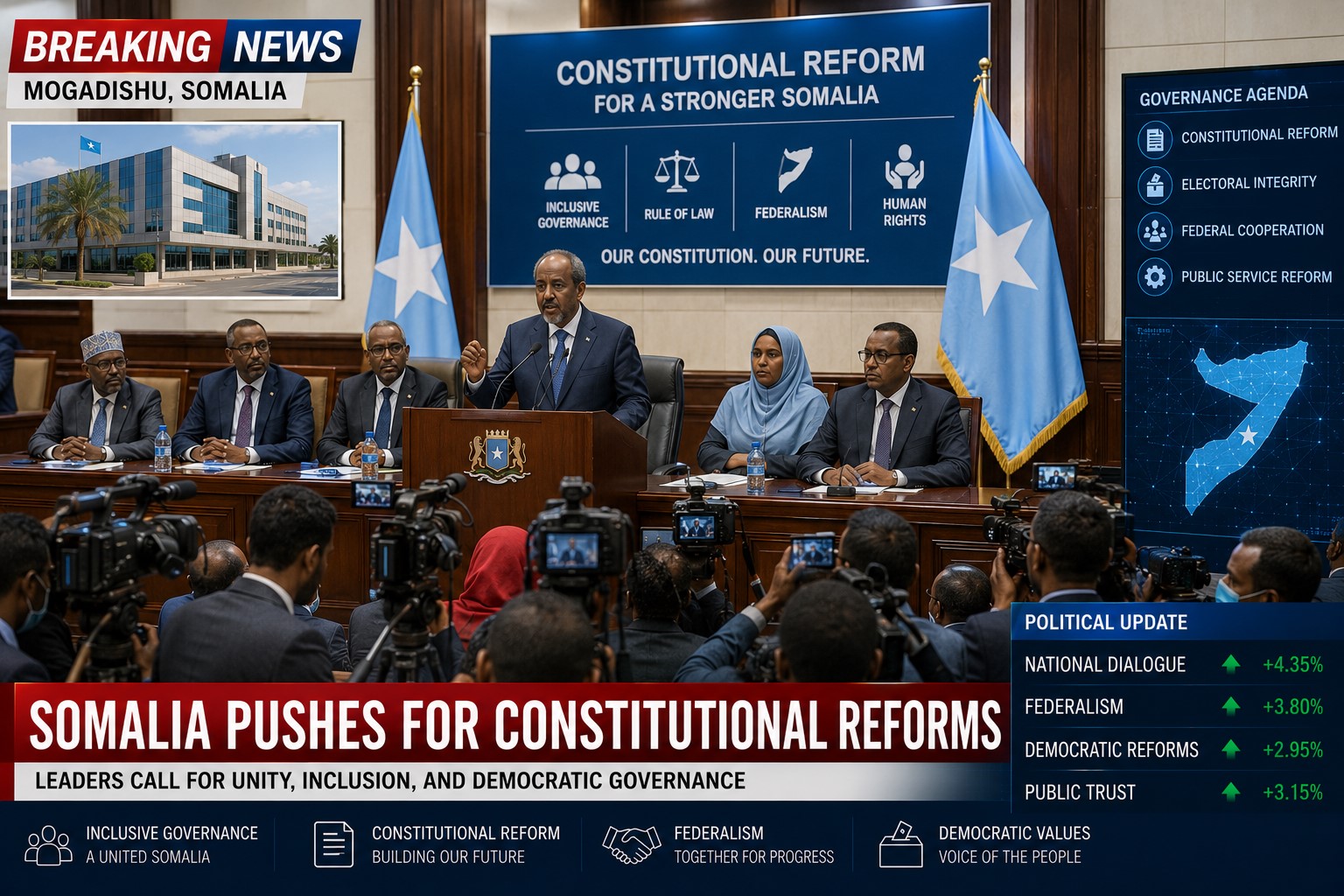
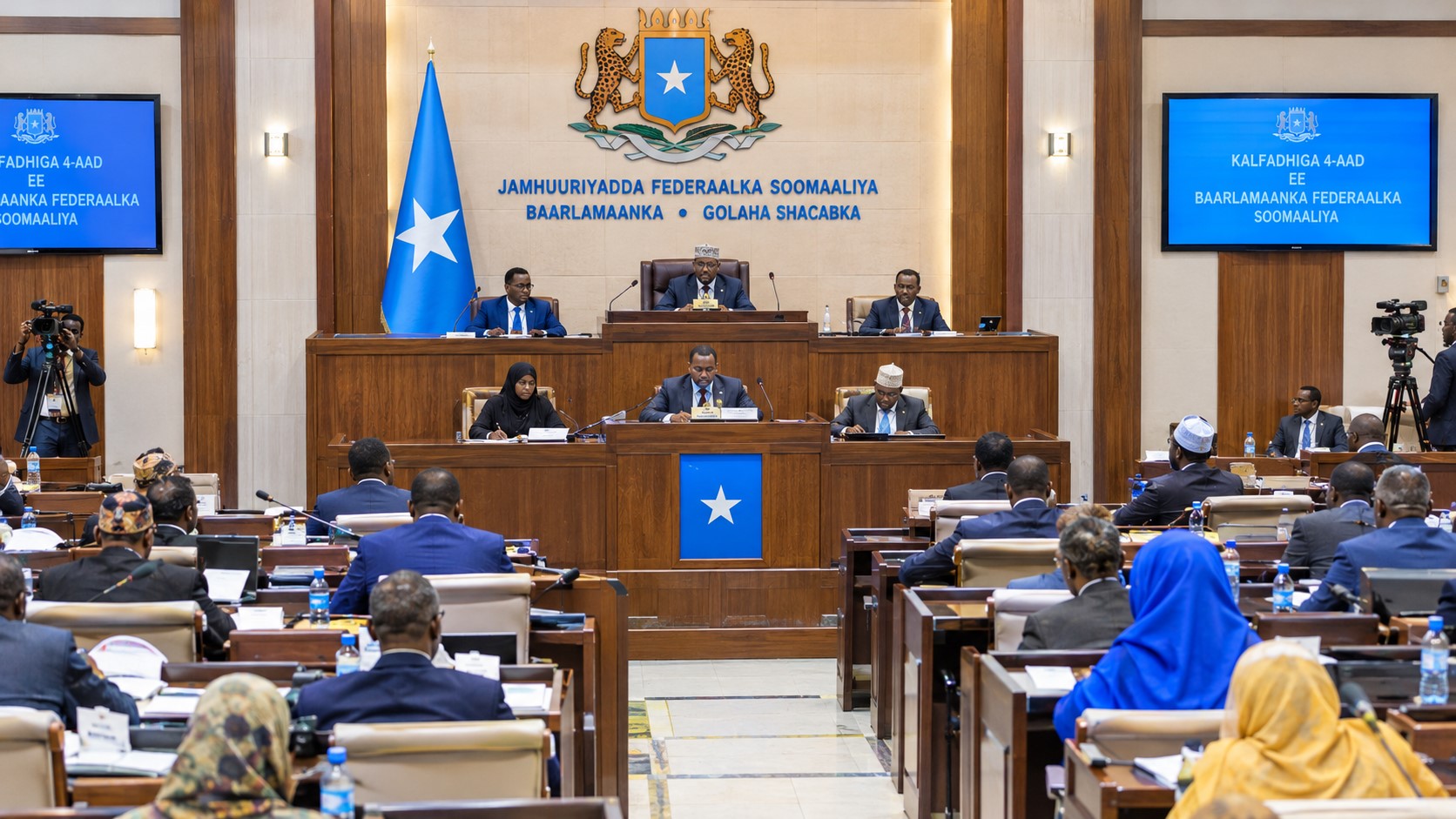
MOGADISHU — Somalia has intensified efforts to advance constitutional reform as political leaders work toward strengthening governance structures and enhancing long-term political stability.
The ongoing discussions involve federal and regional stakeholders seeking consensus on key constitutional provisions, electoral frameworks, and the distribution of powers between national and regional institutions. Officials say the process is essential for supporting democratic development and improving government effectiveness.
Political observers view the reform agenda as one of the most significant governance initiatives in recent years, with potential implications for elections, institutional stability, and national cohesion. Leaders have emphasized the importance of dialogue and cooperation in achieving broad-based political consensus.
The government has also highlighted the role of constitutional modernization in supporting security improvements, economic development, and international partnerships. Analysts believe stronger institutions could help attract investment and reinforce confidence in Somalia's political future.
As negotiations continue, attention remains focused on how reforms could shape the next phase of Somalia's democratic and state-building journey.
Comments (0)
Sign in to join the conversation.