





















































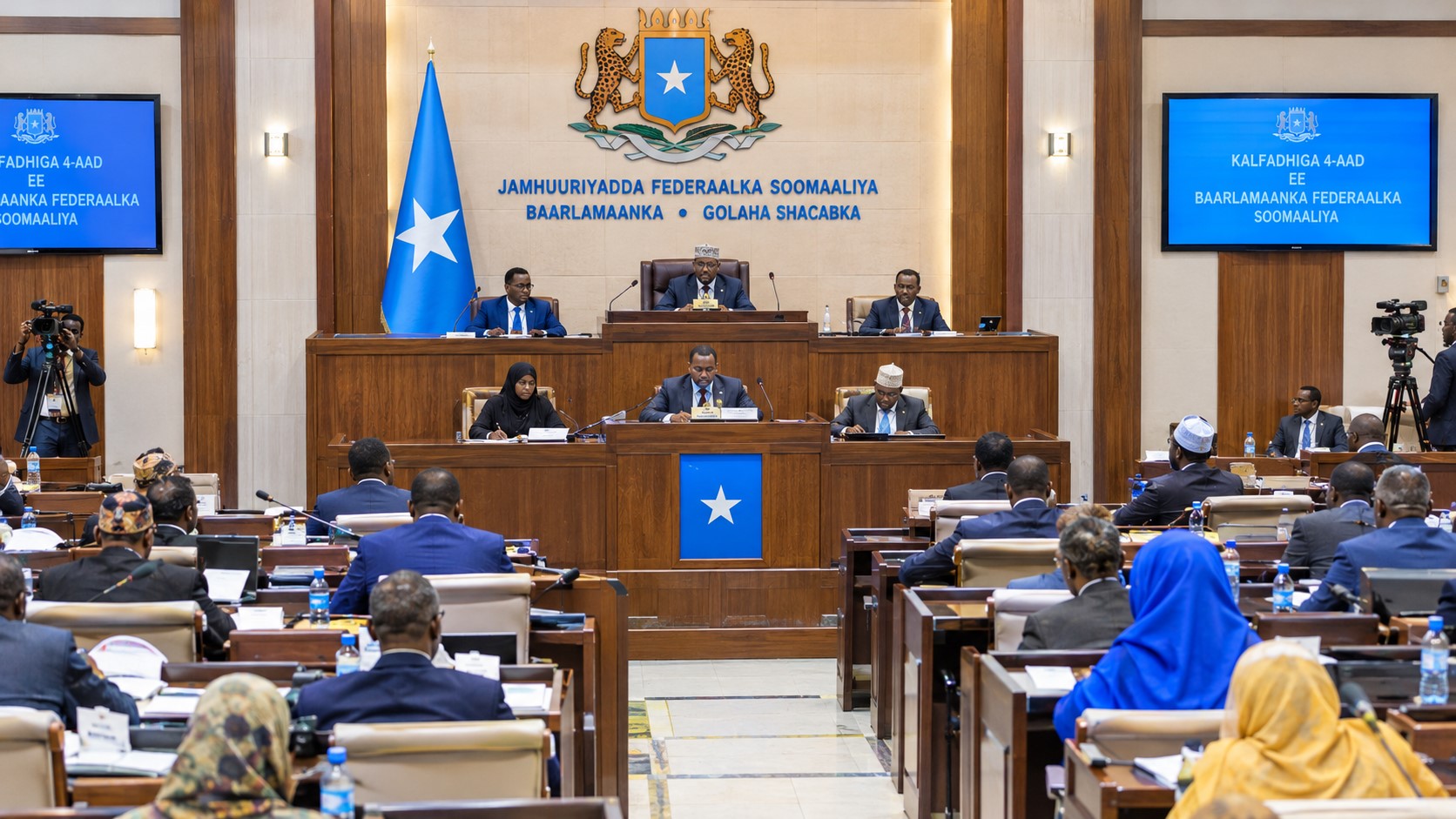
Somalia’s House of the People has begun enforcing salary deductions against lawmakers who repeatedly miss parliamentary sessions, putting attendance and accountability at the centre of a new political debate in Mogadishu.
Reports published on October 11 and 12, 2026, said between eight and 13 lawmakers faced deductions after missing seven parliamentary sessions within a month. The measure revives an attendance rule that had remained largely unenforced for almost four years.
Under the parliament’s rules of procedure, lawmakers who accumulate seven days of unauthorised absence in a month can be referred to the Ethics Committee and lose one-fifth of their monthly salary. With a reported monthly salary of $5,240, the deduction amounts to $1,048.
Speaker Abdulkadir Mohamed Nur defended the enforcement, arguing that members who fulfil their parliamentary duties should not receive the same treatment as those who repeatedly stay away without permission.
The rules also address lawmakers who sign the attendance register but leave before a session ends. Such cases can be counted as absences under the parliamentary procedures.
The decision comes amid concerns about parliamentary sessions being disrupted by a lack of quorum, making it difficult for lawmakers to conduct business. The House generally requires more than 140 members to be present for a session to open.
However, the measure allows lawmakers to challenge deductions. Members who believe they were penalised incorrectly can appeal within 15 days, while approved leave and documented special circumstances may be considered.
The enforcement could strengthen scrutiny of parliamentary attendance and the responsibilities attached to elected office. Its longer-term effect will depend on consistent application of the rules and transparent handling of appeals.
For Somalia’s political institutions, the debate is about more than salary deductions: it concerns whether parliamentary procedures can be enforced fairly while ensuring that lawmakers remain accountable to the public.



Comments (0)
Sign in to join the conversation.