





















































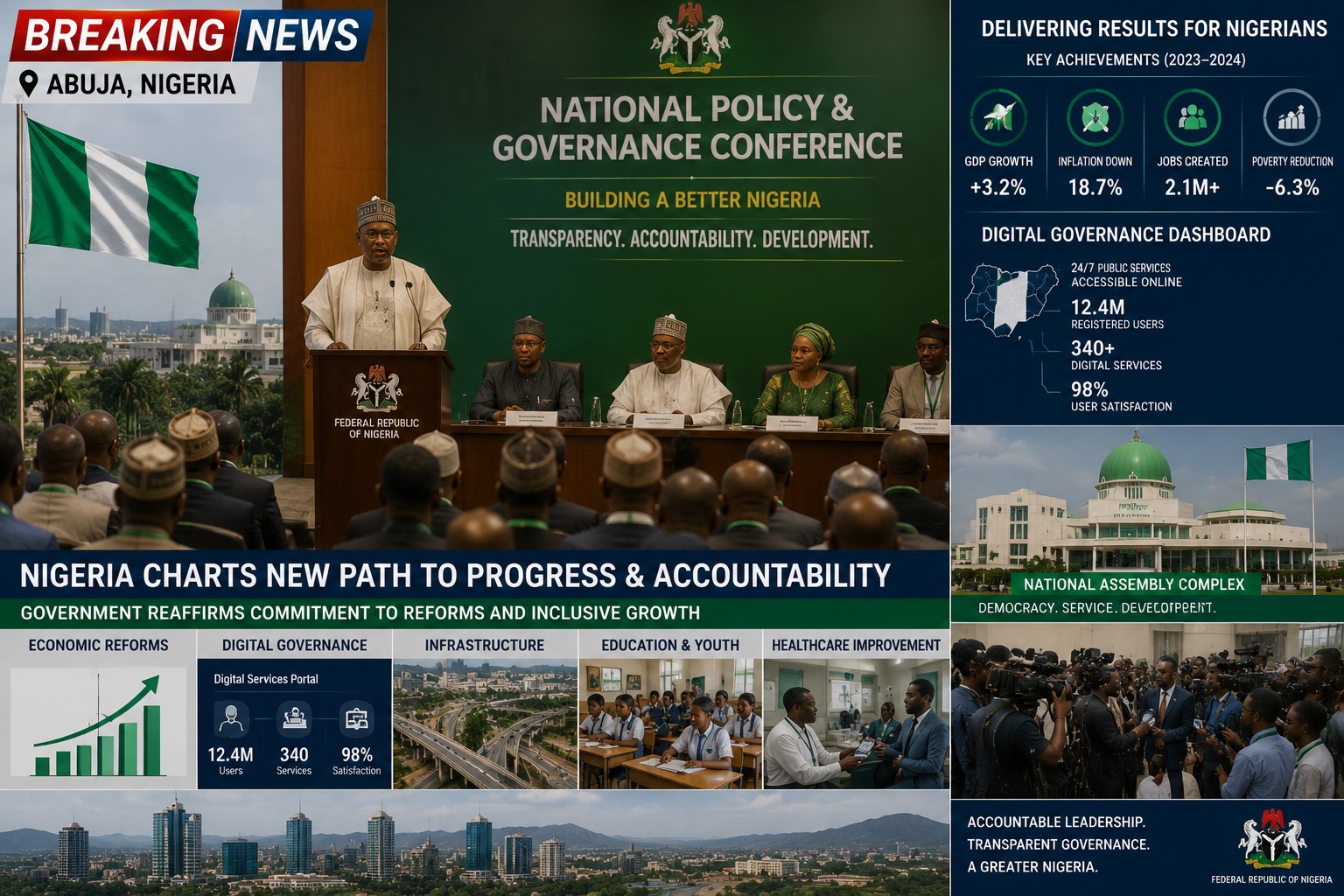
ABUJA — Nigeria is advancing a new phase of governance and administrative reforms designed to improve public service delivery, strengthen institutions, and enhance operational efficiency across government agencies.
Officials say the reform agenda includes expanding digital government platforms, streamlining administrative procedures, and improving access to public services for citizens and businesses. The initiatives are intended to reduce bureaucratic delays while increasing transparency and accountability.
Political observers note that governance modernization is becoming a key pillar of Nigeria's long-term development strategy, particularly as the country seeks to improve investor confidence and strengthen institutional performance.
The government is also investing in technology-driven solutions that support policy implementation, data management, and public sector coordination. Analysts believe digital transformation can help improve efficiency while making government services more accessible.
Several capacity-building programs are being introduced to strengthen workforce skills and support the adoption of modern administrative practices across ministries and public agencies.
As reforms continue, policymakers view stronger institutions and efficient governance systems as essential to supporting economic growth, public trust, and sustainable national development.


Comments (0)
Sign in to join the conversation.