
















































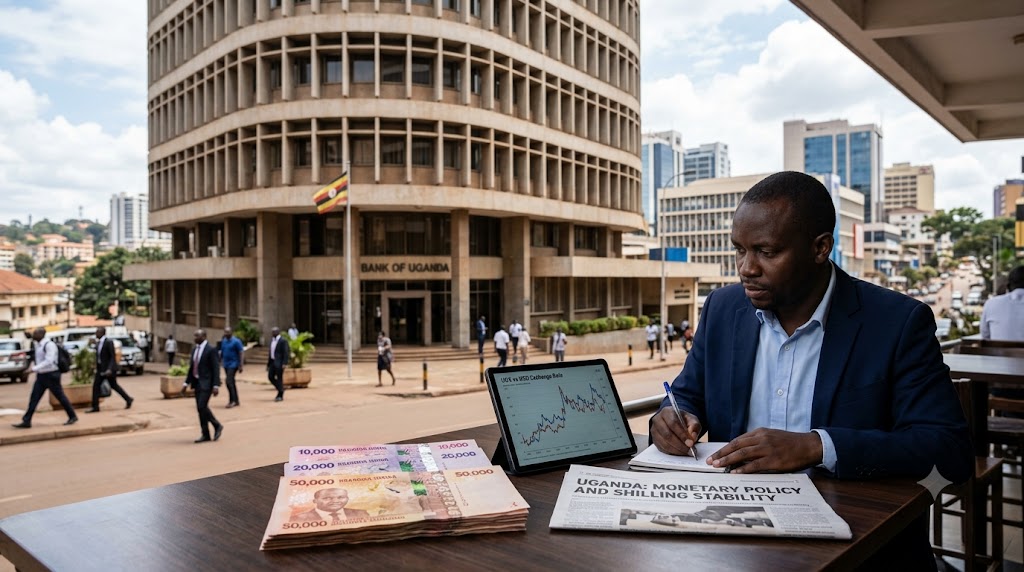
Uganda’s central bank has sharply increased its benchmark interest rate to 12% in an emergency move aimed at stabilising the shilling and containing inflation risks.
The Bank of Uganda announced the increase on October 14, 2026, raising the Central Bank Rate (CBR) from 9.75% to 12% a rise of 2.25 percentage points.
Governor Michael Atingi-Ego said the decision followed a significant deterioration in the country’s current-account position since the previous monetary policy meeting in August. The shilling had lost approximately 12% of its value against the US dollar since the beginning of the year, according to Reuters.
The currency pressure has been linked to increased demand for foreign currency by oil importers amid higher global energy prices, alongside foreign investors withdrawing from Ugandan government bonds.
The rate increase is intended to help ease pressure on the shilling and reduce the risk of imported inflation. A weaker currency can make imported fuel, machinery, medicines and other goods more expensive.
However, higher interest rates can also increase borrowing costs for businesses and households, potentially affecting investment, credit demand and consumer spending.
The decision puts Uganda’s monetary policy response in the spotlight as businesses, importers and consumers monitor exchange rates and prices. The coming weeks will show whether the tighter policy stance helps stabilise the currency and limit inflationary pressures.


Comments (0)
Sign in to join the conversation.