


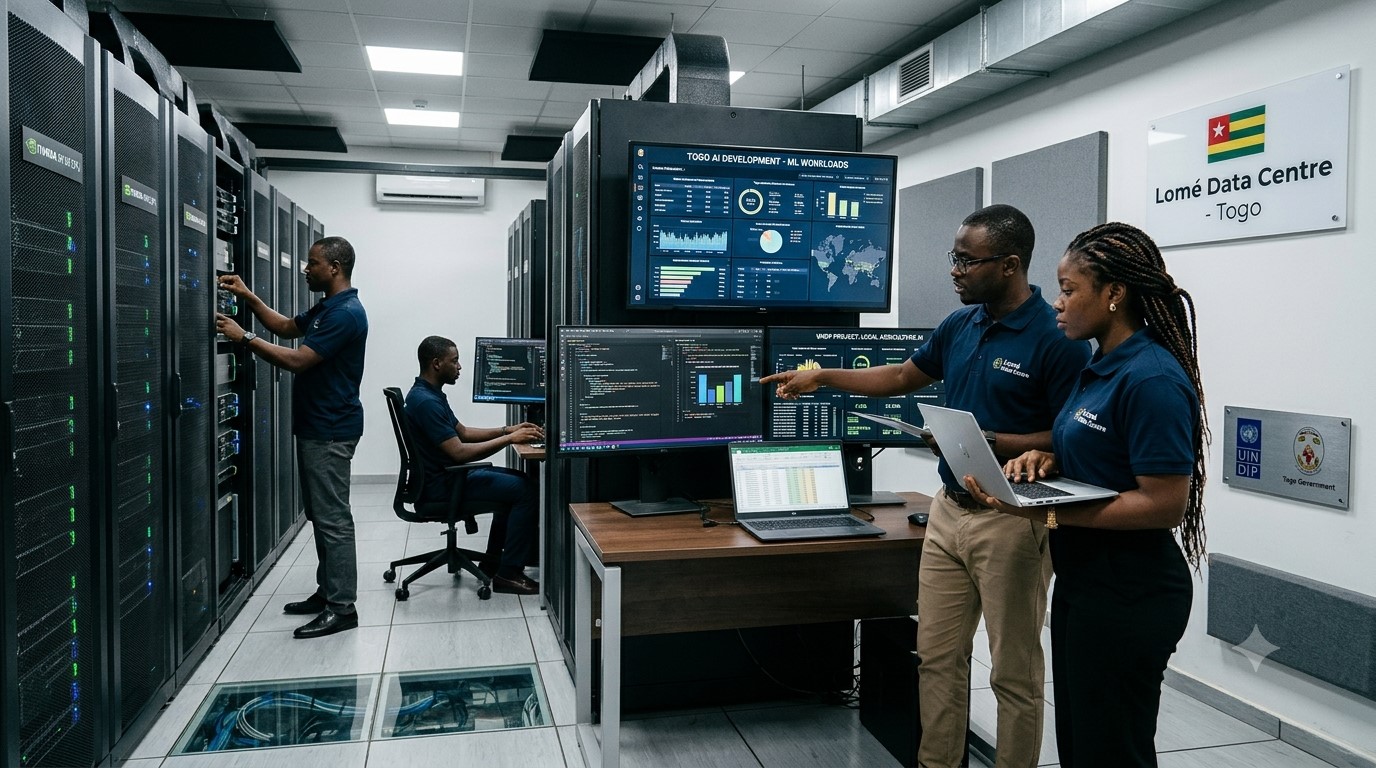
Togo is making progress in its digital transformation strategy through a new artificial intelligence computing infrastructure designed to support local innovation and improve government services.
The United Nations Development Programme (UNDP) provided Togo with a specialised server equipped with Graphics Processing Units (GPUs), which was installed at the Lomé Data Centre in July 2026 and is operated by Togo AI Lab.
The infrastructure provides local researchers, technology specialists and government institutions with computing resources to run artificial intelligence models and develop solutions tailored to national needs.
According to UNDP, the system is already supporting several public-sector applications. One project helps the National Directorate for Public Procurement Control search and analyse government procurement documents. Tasks that previously required several days can reportedly be completed in less than one day.
Another application is being developed for the Ministry of Security to automate parts of the verification process for recruitment applications.
The infrastructure has also supported automated evaluation of technology competition submissions, reducing the reported analysis time for individual projects from 30 minutes to just 10 minutes.
Between August 26 and October 27, 2026, the platform processed approximately 50,200 requests and 23.5 million text units, demonstrating its early operational use.
An additional priority is developing artificial intelligence tools that can better understand Togo's national languages, helping make digital services more accessible to local communities.
The initiative is expected to strengthen the country's technical capabilities, support Togolese technology professionals and reduce dependence on external computing services.
Togo's investment in locally hosted AI infrastructure could become an important foundation for developing homegrown technology solutions and expanding digital innovation across West Africa.

Comments (0)
Sign in to join the conversation.