

















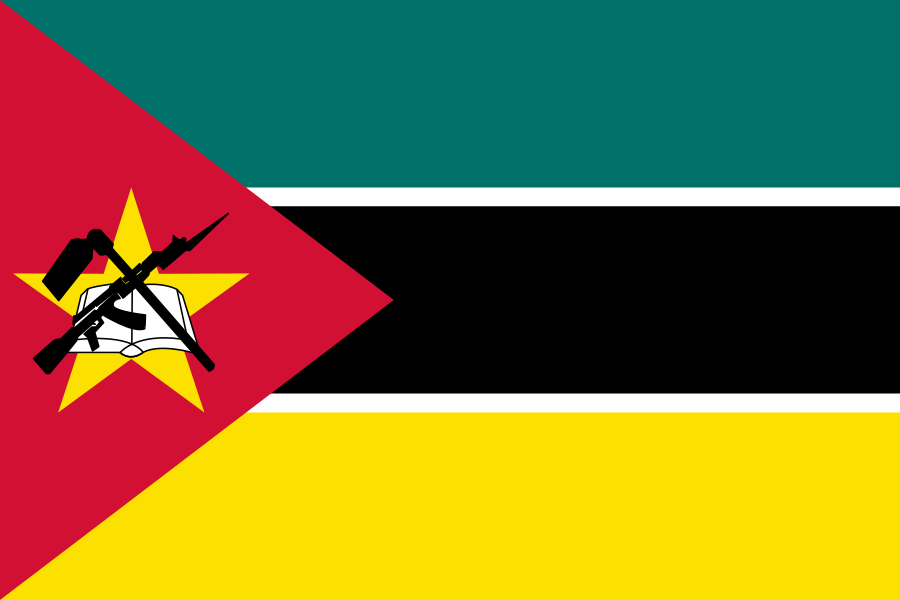










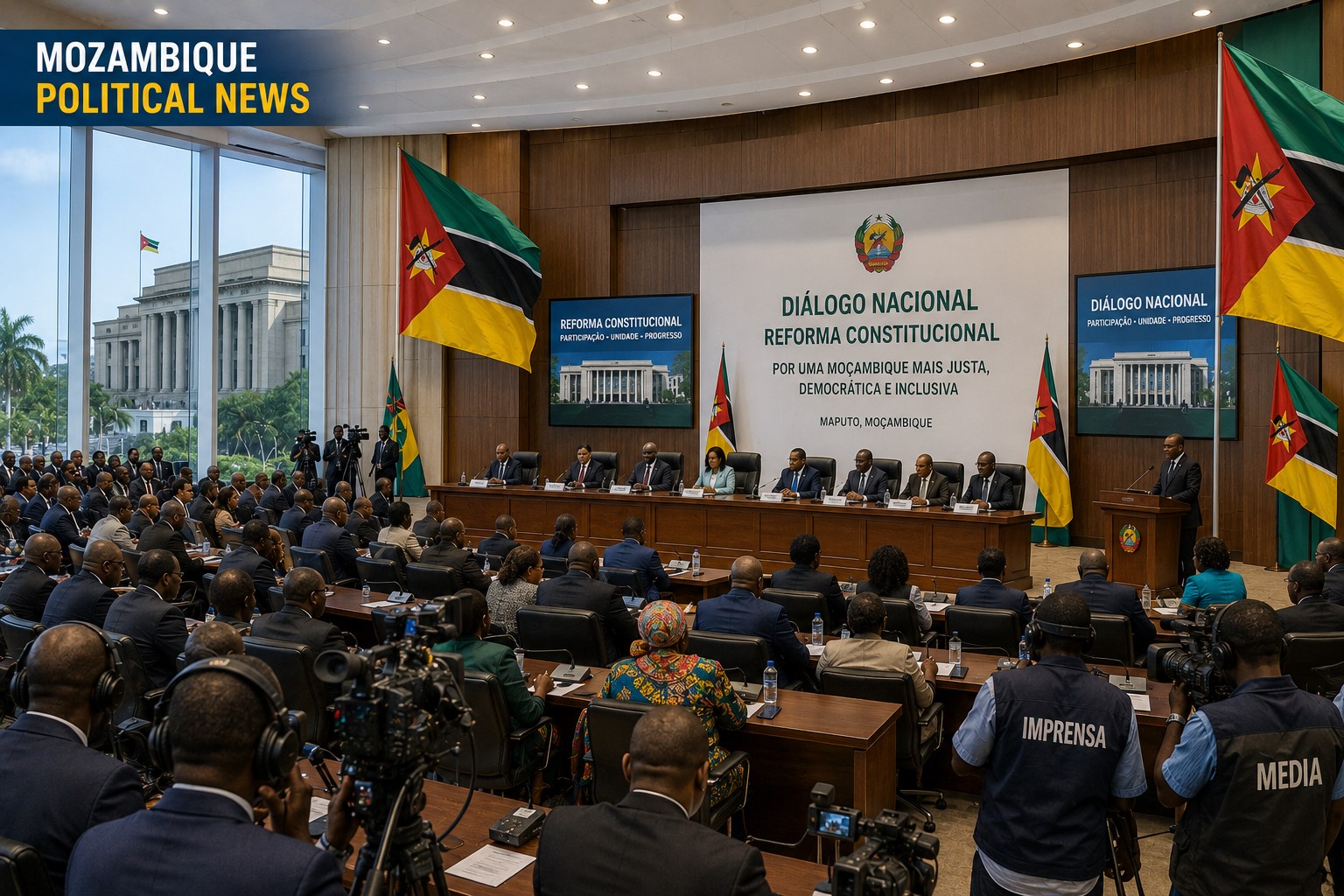
MAPUTO, Mozambique — Mozambique has taken new steps to advance its political reform agenda as the government expands efforts to promote national dialogue, institutional modernization, and long-term political stability.
President Daniel Chapo has reiterated the importance of inclusive engagement among political parties, civil society organizations, and public institutions as part of an ongoing national dialogue process designed to address governance challenges and strengthen democratic institutions.
Government officials say the initiative will focus on constitutional reforms, improvements to public administration, decentralization policies, and mechanisms aimed at enhancing citizen participation in decision-making processes. The reforms are expected to play a significant role in shaping Mozambique's political landscape over the coming years.
The latest developments come as Mozambique continues to pursue broader governance reforms while strengthening cooperation with international partners. Recent high-level discussions between Mozambique and international stakeholders have highlighted priorities such as local governance, economic development, institutional capacity building, and regional stability.
Political analysts believe the dialogue process could help reduce tensions, improve political consensus, and create a more predictable environment for economic growth and foreign investment. Observers also note that successful implementation of governance reforms could strengthen public confidence in state institutions and support long-term national development goals.
As Mozambique enters a new phase of political engagement, attention is now focused on how reform proposals will be translated into policy actions and whether the dialogue process can deliver meaningful outcomes for citizens across the country.
Comments (0)
Sign in to join the conversation.