





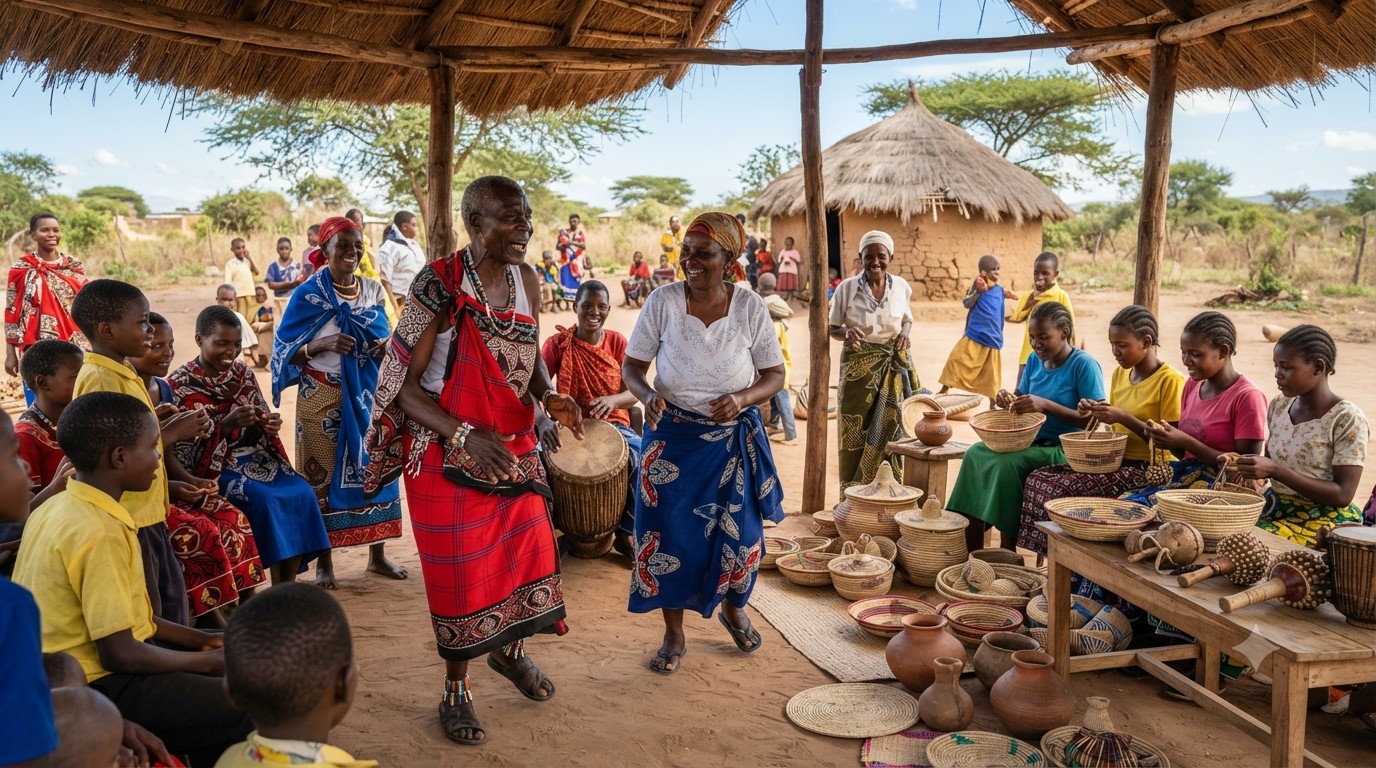
Tanzania is strengthening efforts to preserve its traditional arts and cultural heritage through a community initiative bringing together elders, cultural practitioners and young people in the Dodoma Region.
The programme, supported by UNESCO, focused on passing traditional Gogo cultural knowledge and skills from older generations to younger participants through practical demonstrations and community learning.
The two-day initiative took place on November 11 and 12, 2026, at Chamwino Arts Centre, bringing together cultural stakeholders to promote the preservation of intangible cultural heritage.
Traditional Dance, Crafts and Cooking Take Centre Stage
Participants explored different aspects of Gogo cultural heritage, including traditional dances, cooking practices, craft-making and knowledge associated with traditional housing.
Young people had opportunities to learn directly from elders through demonstrations, participation and hands-on activities.
The initiative aims to ensure that traditional artistic practices remain alive rather than becoming limited to historical records or occasional performances.
Elders and Young Artists Working Together
Organisers highlighted the importance of strengthening relationships between generations to ensure cultural knowledge continues to be shared.
The programme encouraged young participants to learn the skills, stories and meanings associated with their community's traditions while giving elders opportunities to pass on their knowledge.
A New Guide for Cultural Heritage Preservation
The initiative also contributed to the development of a draft community guide designed to help communities preserve and transmit intangible cultural heritage.
The proposed guide will outline ways to identify important cultural practices, involve elders and young people, organise practical learning and sustain community-led cultural activities.
The programme highlights how traditional arts can support cultural identity, education and community development in Tanzania.
Through stronger community participation, the initiative seeks to help ensure that Gogo traditions and other cultural practices continue to inspire future generations.



Comments (0)
Sign in to join the conversation.