





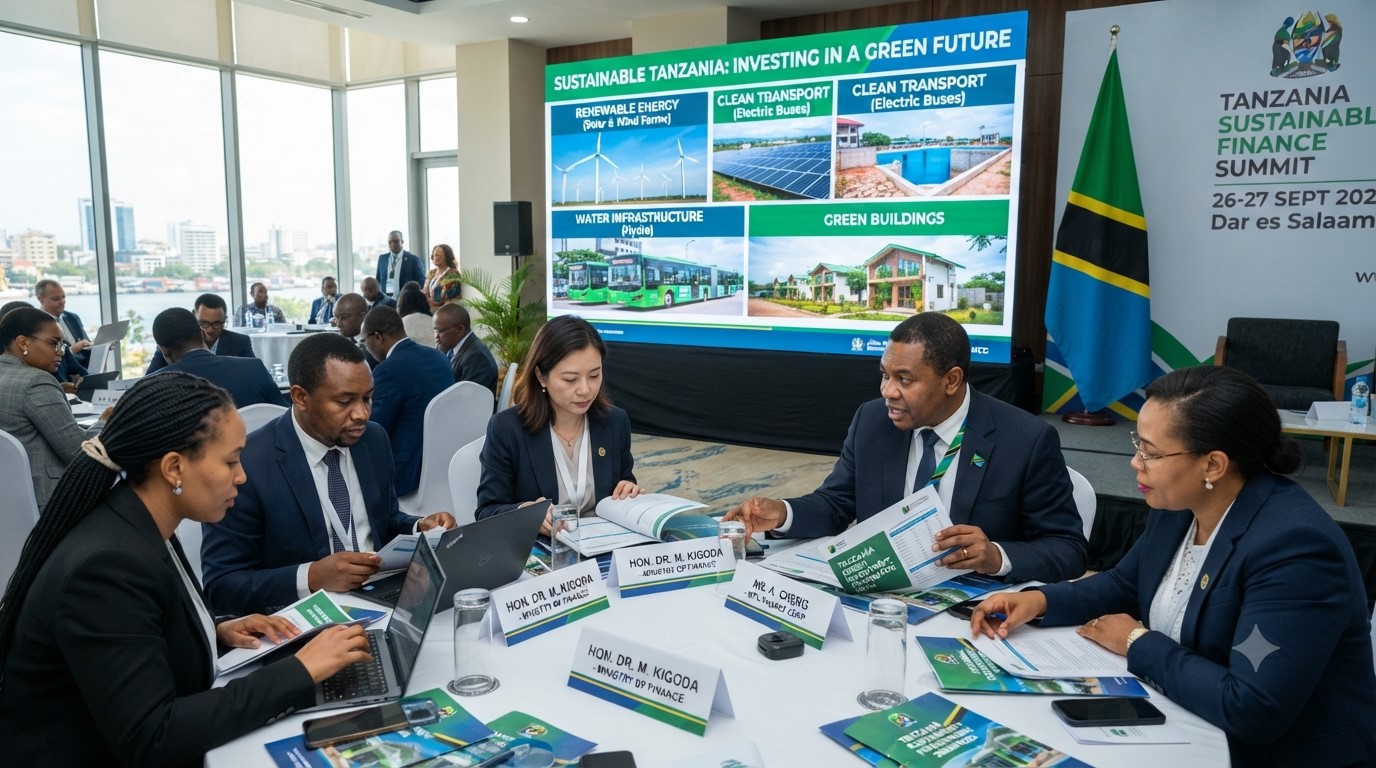
Tanzania has introduced its first Sovereign Sustainable Finance Framework, creating a new financing pathway for environmental, infrastructure and social development projects across the country.
Announced by the Ministry of Finance in November 2026, the framework is designed to attract investment through green bonds, social bonds, sustainability-linked financing instruments, Sukuk and other eligible funding mechanisms.
The initiative is expected to support projects aligned with Tanzania's long-term development priorities while opening opportunities for investors interested in sustainable economic growth.
Renewable Energy and Infrastructure Among Priority Sectors
The framework identifies renewable energy, electricity storage, water infrastructure, clean transport, energy efficiency, climate adaptation and environmental conservation as priority areas for green financing.
Eligible projects could include solar and wind power, qualifying hydropower, geothermal energy, electrified railways, irrigation infrastructure, forest restoration and improved water systems.
These investments could support infrastructure development, improve energy access and create opportunities for companies involved in engineering, construction, technology and environmental services.
Social Investment and Employment Opportunities
The framework also covers social development projects, including affordable housing, employment generation, healthcare, education, food security, financial inclusion and economic empowerment.
Small businesses and private-sector enterprises could potentially benefit indirectly through government-supported programmes and eligible development projects.
Transparency and Investor Confidence
The Ministry of Finance has established procedures for project selection, fund allocation, monitoring and reporting to strengthen accountability.
The framework requires reporting on financed projects and their impact, including indicators such as renewable energy capacity, jobs created, water saved and beneficiaries of healthcare and education programmes.
The introduction of the framework represents a new development in Tanzania's capital markets and sustainable investment strategy, potentially strengthening the country's ability to attract international financing for long-term economic development.
However, the framework itself does not announce a specific bond issuance amount or timetable. Actual financing will depend on eligible projects, government approvals and future issuance plans.



Comments (0)
Sign in to join the conversation.