





















































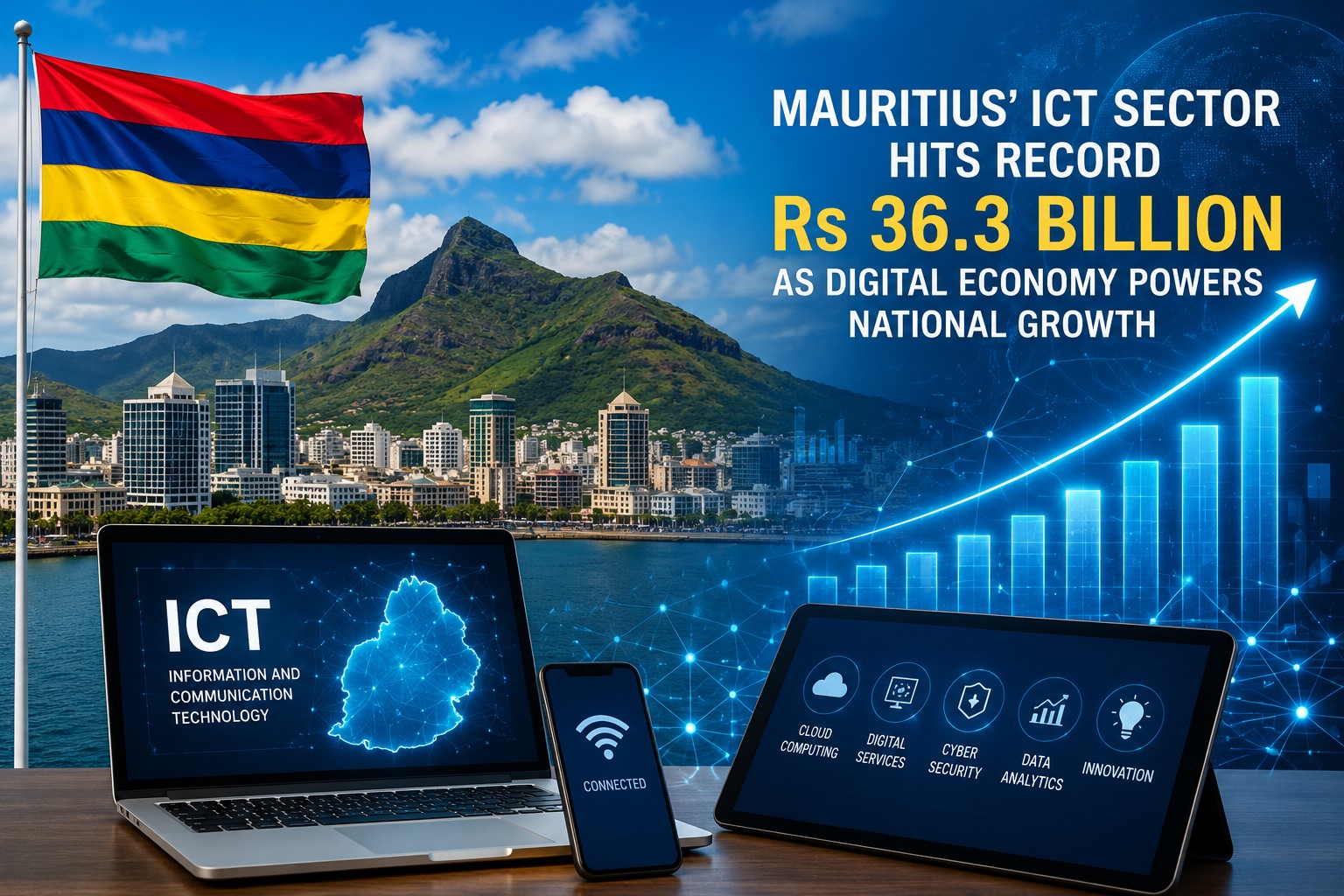
Mauritius' information and communication technology (ICT) sector reached a significant milestone in 2025, generating Rs 36.3 billion in value added to the economy. According to the latest figures from Statistics Mauritius, the sector recorded a 6.9% increase compared with Rs 33.9 billion in 2024, reinforcing its position as one of the country's key economic drivers.
The sector posted a real growth rate of 4.5% during the year, while maintaining a steady 5.7% contribution to the nation's gross value added. The latest performance highlights Mauritius' continued transition toward a knowledge-based and digitally connected economy.
Growing Digital Adoption
The report shows that Mauritians are increasingly embracing digital communication and online services. Internet-based voice and video calls have become the preferred communication method for most users, replacing traditional mobile calls and SMS messaging.
Social media continues to enjoy widespread popularity, while online entertainment, digital learning, and internet-based services have become an integral part of everyday life. Overall internet usage among people aged 12 and above has risen significantly, reflecting the country's expanding digital ecosystem.
Stronger Internet Connectivity
Mauritius continues to invest in modern telecommunications infrastructure, supported by multiple mobile operators, internet service providers, and extensive nationwide network coverage.
Internet subscriptions increased during 2025, with broadband accounting for nearly all connections and mobile broadband representing the majority of users. Smartphone ownership also continues to rise, while internet access among older citizens has expanded rapidly, helping to narrow the country's digital divide.
The growing availability of affordable broadband and mobile data has further encouraged individuals and businesses to adopt digital services across various sectors.
Online Services Continue to Expand
Digital banking, e-commerce, online education, and government services continue to attract more users across Mauritius. Businesses have also maintained high levels of digital adoption, with nearly all medium and large enterprises relying on computers and internet connectivity for daily operations.
Although online purchasing by businesses remained relatively stable, increasing internet speeds and international bandwidth capacity continue to strengthen Mauritius' digital infrastructure.
Technology Services Lead Economic Growth
Computer programming, software development, IT consulting, and information services remain the largest contributors to the ICT industry's economic output, followed by telecommunications, call centres, and technology-related trade.
One of the strongest indicators of the sector's success came from international markets. ICT exports climbed substantially in 2025, driven primarily by the rapid expansion of digital and professional service exports. This reflects Mauritius' growing reputation as a regional hub for high-value technology and business services.
Employment Remains a Challenge
Despite strong financial growth, employment within the ICT sector declined slightly during the year as the number of larger technology firms decreased. Industry experts note that automation, improved productivity, and evolving business models may be contributing to slower job growth even as overall output continues to rise.
Looking ahead, Mauritius is expected to continue investing in digital innovation, cybersecurity, artificial intelligence, cloud computing, and digital skills development to strengthen its competitiveness within Africa and the global digital economy.


Comments (0)
Sign in to join the conversation.