





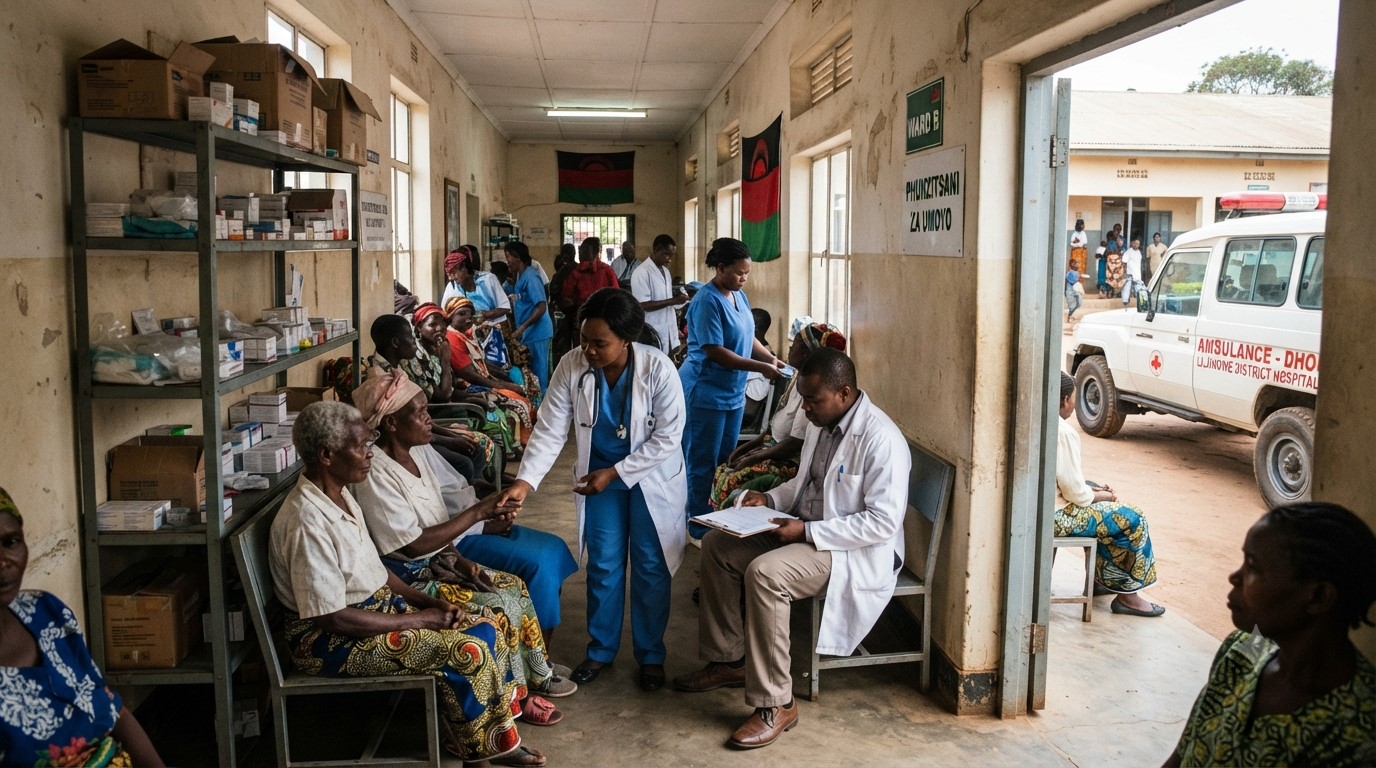
Malawi's healthcare system is facing mounting pressure as shortages of essential medicines, fuel, medical equipment and healthcare personnel continue to affect public hospitals across the country.
The Medical Doctors Union of Malawi (MDUM) has called on the government to declare a national state of emergency in the health sector, warning that the worsening situation is putting patients' lives at risk.
In a statement issued on November 26, the union highlighted growing difficulties faced by healthcare workers in providing essential treatment, particularly at facilities struggling with limited resources.
Medicine and Medical Supply Shortages
Hospitals are reportedly experiencing shortages of essential medicines, protective equipment and other medical supplies needed for routine and emergency treatment.
The situation has raised concerns about patients being forced to purchase medical items from private pharmacies, increasing the financial burden on families who depend on public healthcare services.
Recent reporting has also highlighted serious medicine shortages at district hospitals, including reduced availability of intravenous fluids, gloves, painkillers and other essential supplies.
Fuel Shortages Affect Emergency Services
Fuel shortages have reportedly affected ambulance operations at some healthcare facilities, creating additional challenges for patients who require urgent transfers to district or referral hospitals.
The doctors' union warned that disruptions to emergency transportation could have serious consequences, particularly for patients in rural communities where hospitals are located far apart.
Calls for Government Intervention
MDUM is urging authorities to urgently address shortages of medicines, fuel, staffing and essential hospital equipment.
Healthcare professionals say immediate action is needed to stabilise public hospitals, improve working conditions and ensure patients can access essential treatment without unnecessary delays.
The growing healthcare crisis has renewed calls for stronger government investment, improved medicine procurement and reliable funding for public health facilities.
The coming weeks will be crucial in determining whether emergency interventions can restore confidence in Malawi's healthcare system and improve conditions for patients and frontline workers.
Comments (0)
Sign in to join the conversation.