


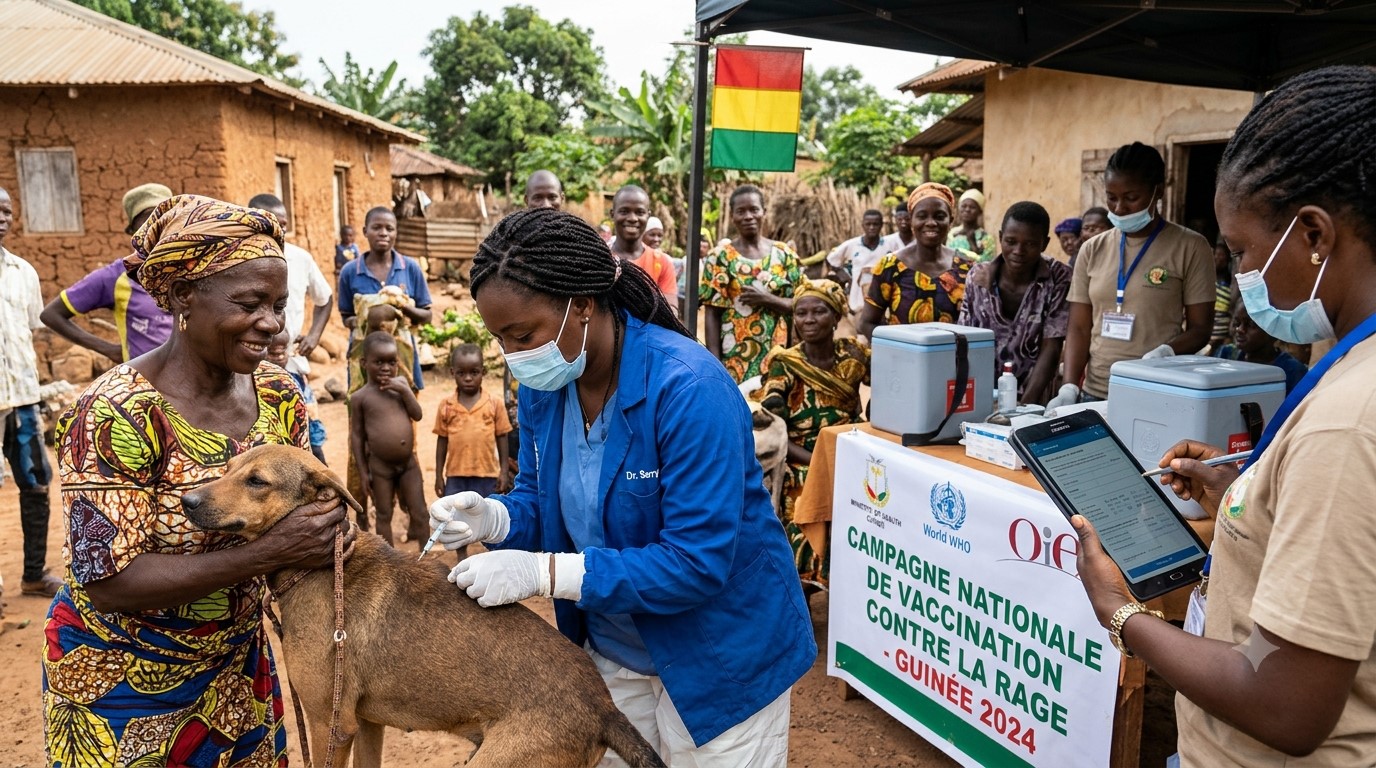
Guinea is stepping up its fight against rabies with plans to procure 500,000 vaccine doses in 2026, as authorities work towards reducing preventable deaths and strengthening animal-disease surveillance.
According to the World Health Organization (WHO), Guinea has made significant progress through nationwide dog-vaccination campaigns. More than 295,000 animals were vaccinated in 2025, building on earlier campaigns designed to protect communities from the deadly disease.
The government is now moving towards a more structured national rabies-control programme, combining repeated dog vaccinations with improved surveillance, public awareness and access to treatment for people exposed to potentially infected animals.
Digital Technology Supports Disease Control
Digital applications are helping vaccination teams record doses, monitor campaign progress and identify communities requiring additional coverage.
The programme also includes plans for school-based rabies education targeting approximately 300,000 students, helping children recognise the dangers of animal bites and understand the importance of seeking medical attention quickly.
Aiming for Zero Human Deaths
Rabies remains a serious public health concern, particularly where vaccination coverage among dogs and access to post-exposure treatment are limited.
The WHO says Guinea's long-term strategy requires sustained vaccination, stronger laboratory surveillance and reliable access to preventive treatment for people bitten by potentially rabid animals.
Guinea's goal is to contribute to the global target of eliminating human deaths from dog-mediated rabies by 2030. Maintaining vaccination coverage and ensuring timely treatment will be essential to achieving that ambition.

Comments (0)
Sign in to join the conversation.