


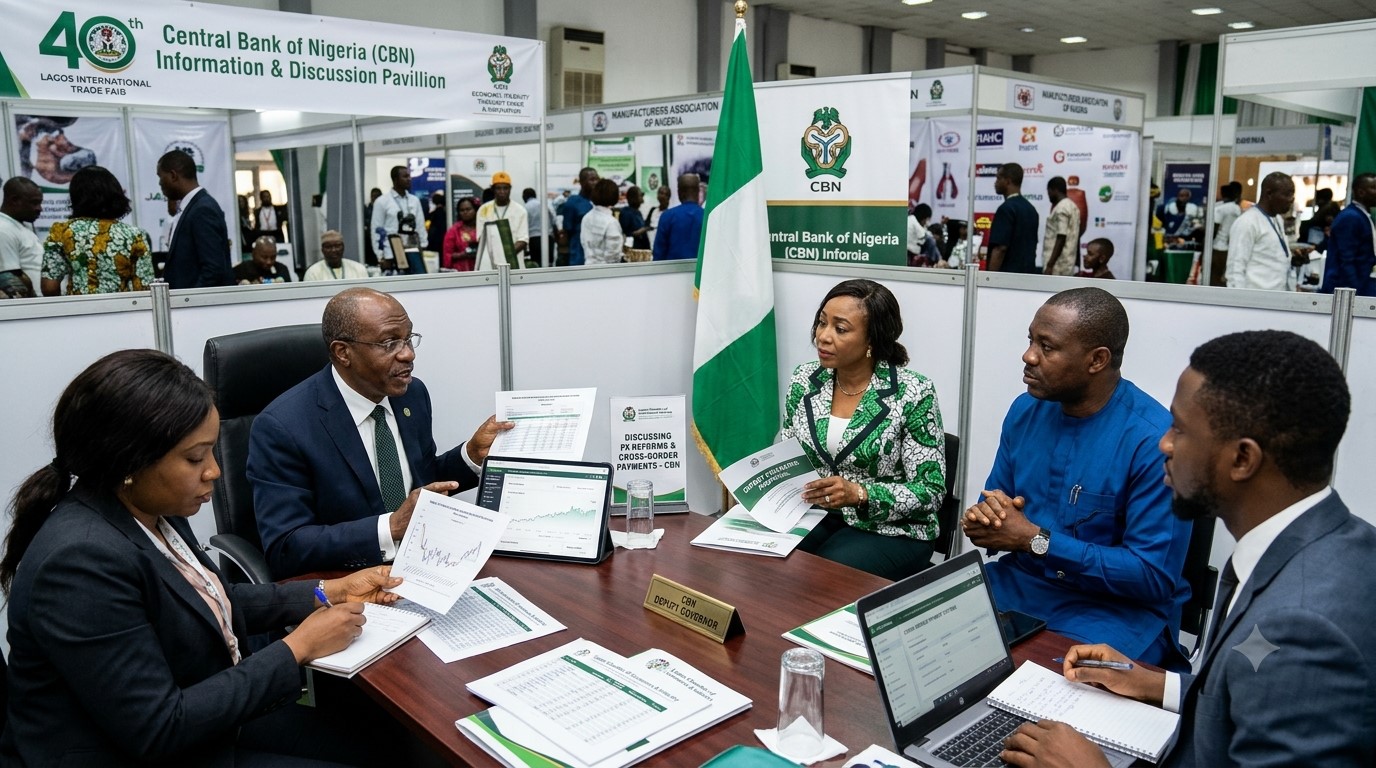
The Central Bank of Nigeria (CBN) has identified macroeconomic stability, foreign exchange reforms and improved cross-border payment systems as essential factors for strengthening the country's business environment and international trade competitiveness.
Speaking at the CBN Special Day during the 40th Lagos International Trade Fair, Director of Stakeholder Engagement and Institutional Relations, Hakama Sidi Ali, said businesses need a predictable economic environment to plan investments, manage production costs and compete in international markets.
The CBN highlighted improvements in Nigeria's foreign exchange market, including the Electronic Foreign Exchange Matching System (EFEMS) and the Nigerian FX Code, as measures designed to improve transparency and market confidence.
The bank also pointed to the importance of the Pan-African Payment and Settlement System (PAPSS) in making cross-border transactions easier for Nigerian companies trading with other African countries.
According to the CBN representative, headline inflation moderated to 14.63% in September 2026, compared with 34.8% in November 2024. The Monetary Policy Rate was also reduced from 26.5% to 23% at the September 2026 Monetary Policy Committee meeting.
However, access to affordable financing remains a major challenge, particularly for micro, small and medium-sized enterprises (MSMEs).
The CBN encouraged Nigerian businesses to explore opportunities in agricultural exports, manufacturing, technology services and creative industries to expand their international market presence.
The message is clear: stronger financial stability, reliable payment infrastructure and competitive exports will be essential to Nigeria's next phase of business growth.



Comments (0)
Sign in to join the conversation.