





















































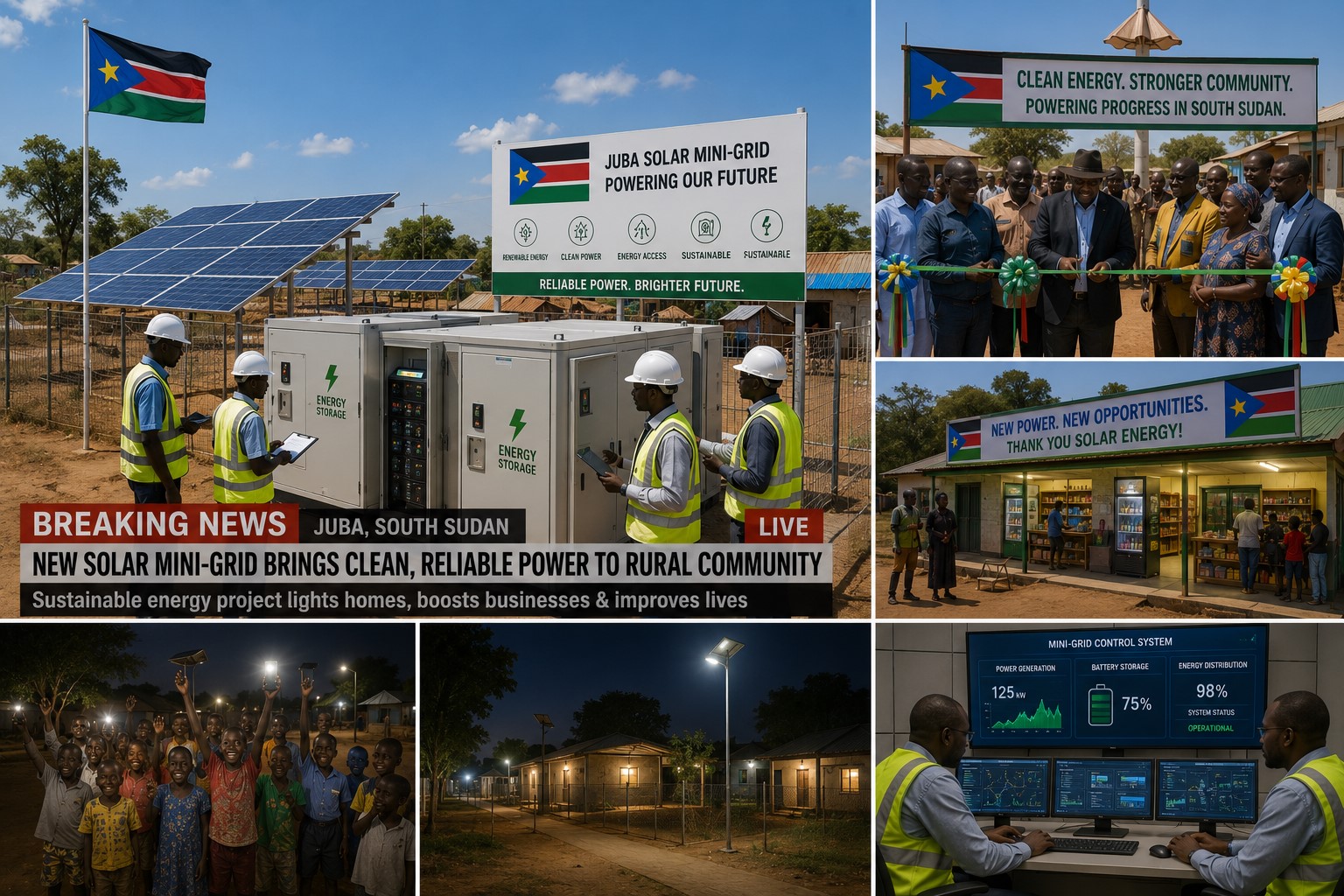
JUBA — South Sudan has launched a major expansion of renewable energy mini-grid infrastructure aimed at improving electricity access, supporting rural communities, and strengthening long-term economic development.
The initiative focuses on installing solar-powered mini-grids, battery energy storage systems, and smart electricity distribution technologies that provide reliable power to households, schools, healthcare facilities, and small businesses in underserved areas.
Energy experts say decentralized renewable power is becoming an important foundation for South Sudan's future development. Expanded electricity access is expected to stimulate entrepreneurship, improve essential public services, support agricultural processing, and encourage investment in rural economies.
Authorities are also working with energy developers, engineering firms, and community organizations to strengthen local technical skills and improve the long-term operation of clean energy systems.
Development analysts believe continued investment in renewable energy infrastructure will enhance resilience, reduce dependence on expensive fuel-powered generation, and create new employment opportunities across the energy sector.
As deployment continues, South Sudan is reinforcing its commitment to sustainable infrastructure, clean energy innovation, and inclusive national development.
Comments (0)
Sign in to join the conversation.